Why Period Cramps Hurt More on Days You Travel
Quick Answer: Travel days combine prolonged sitting, dehydration, disrupted meals, poor sleep, constipation and cold environments — every one of which independently makes cramps worse. It is rarely one cause. The fixes that matter most are staying properly hydrated, getting up to move at least hourly, keeping meals roughly on schedule, and carrying heat rather than hoping to find some.
The same day of your cycle at home is manageable. On a plane or in a car for six hours it is not, and it is not your imagination.
This is general information, not medical advice.
What is travel actually stacking up?
Six aggravators, most of which people do not connect to cramps.
Prolonged sitting. Sitting still for hours reduces blood flow to the pelvis and holds the hip flexors in a shortened position, both of which make cramping worse. Cramps are commonly reported as worse on days with more sitting.
Dehydration. Almost universal on travel days — you drink less to avoid needing a toilet, and cabin air or car heating dries you out further. Dehydration is a well-recognised cramp aggravator.
Disrupted meals. Long gaps and then something quick, which affects blood sugar and, over a day or two, digestion.
Constipation. Extremely common with travel and it makes cramps noticeably worse, because a full bowel physically presses on an already-cramping uterus.
Poor or short sleep. Sleep loss lowers pain threshold measurably.
Cold. Air conditioning, draughty stations, cold cars. Cold increases muscle tension and reduces blood flow, and cramps are commonly reported as worse in cold conditions.
No single one of these is dramatic. All six on the same day is.
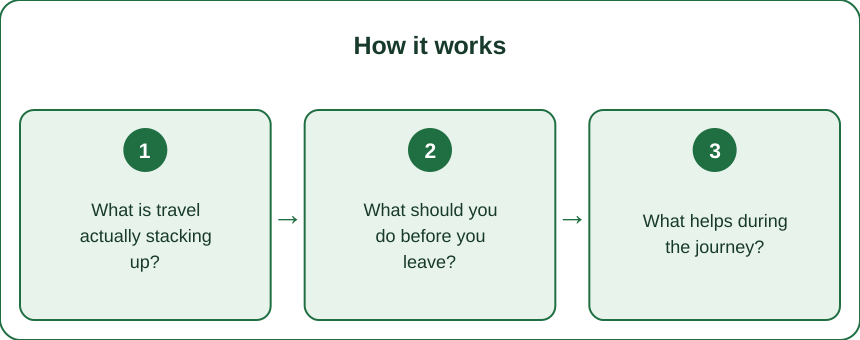
What should you do before you leave?
Start hydrating the day before
You cannot catch up during a journey where you are rationing toilet trips. Arriving hydrated changes the whole day.
Take pain relief before the cramps build, if you use it
Timing matters more than dose with anti-inflammatory pain relief — taken as symptoms start rather than once they are established, it works considerably better. On a travel day, that means before you leave rather than three hours in. Check suitability with a pharmacist or doctor if you are unsure.
Deal with constipation in advance
If travel reliably constipates you, address it the day before rather than the day after. Fibre, fluid and movement.
Pack heat that works without a plug
Adhesive heat patches are the single most useful travel item for this. They are discreet, they last for hours, and they work on a plane where nothing else does. Heat applied to the lower back is often more effective than heat on the abdomen, and a patch is easier to place there anyway.
Wear something with a soft waistband
A firm waistband across a cramping abdomen for six hours is genuinely worse. This is a small decision with a disproportionate effect.
Eat before you go
A proper meal beforehand beats whatever is available at the station.

What helps during the journey?
Get up every hour, even briefly. Walking the aisle or stopping the car. This addresses sitting, circulation and constipation at once, and it is the highest-value thing you can do.
Keep drinking despite the toilet calculation. Dehydration will cost you more than the inconvenience does. This is the trade most people get wrong.
Do seated movement between stops. Ankle circles, gentle knee lifts, a slow seated pelvic tilt. Small movements maintain circulation better than complete stillness.
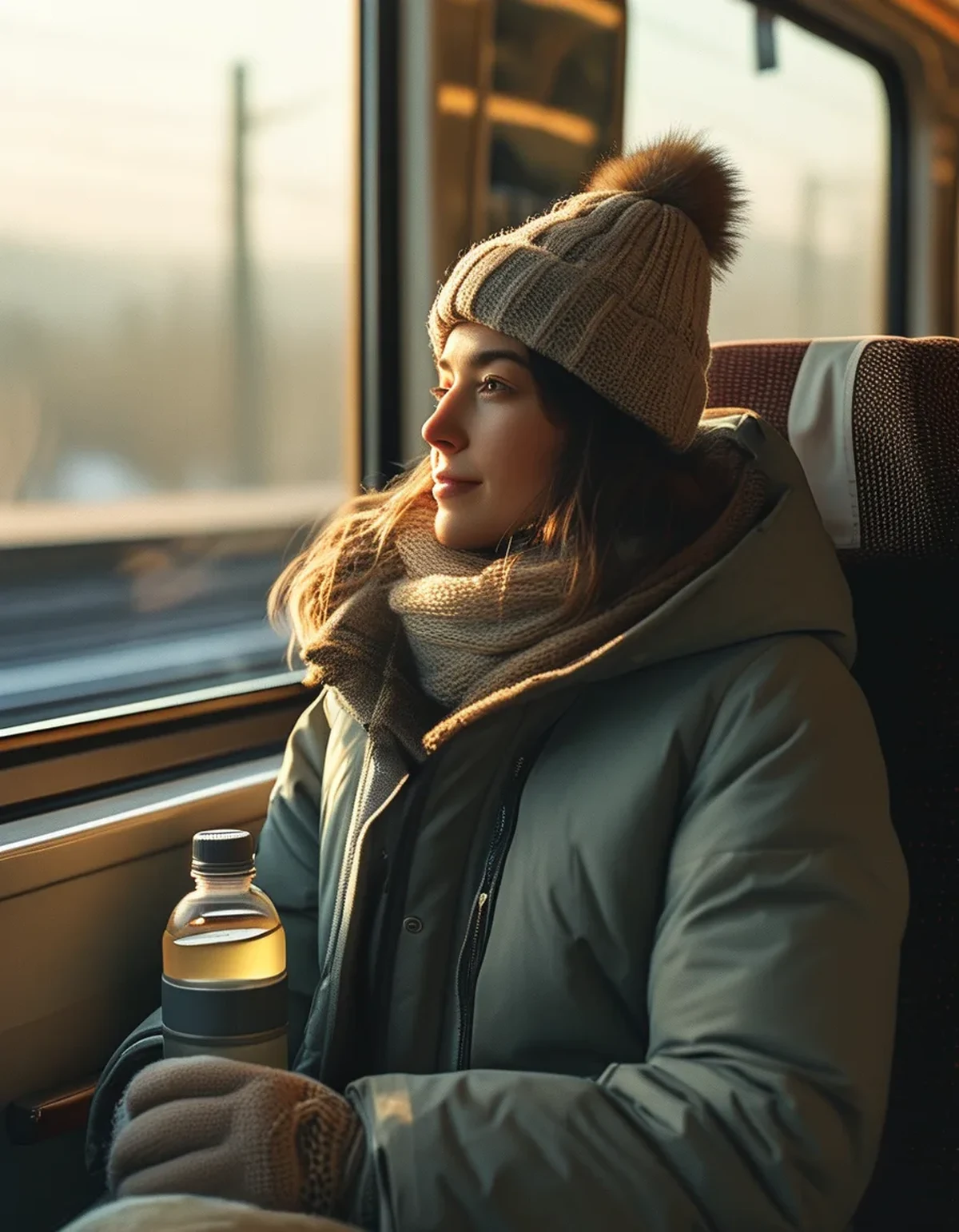
Add a layer before you feel cold. Being cold on a long journey is much harder to reverse than to prevent, and warmth genuinely helps.
Eat something reasonable on schedule. Not perfect, just on time. A long gap followed by something fast is worse than a modest snack at the right hour.
Use the heat patch early. Waiting until cramps are established means the heat is playing catch-up. Heat works best applied before the peak.
Myth vs Fact: You just have to push through a travel day
Myth: Nothing can be done about cramps while travelling, so the only option is to endure it and recover afterwards.
Fact: Most of what makes a travel day bad is modifiable, and the modifications are small. Hydration, hourly movement, timely pain relief and a heat patch address four of the six aggravators, and they are all available to anyone on any journey. The version of the day where you did none of those is not the inevitable version.
A second myth worth flattening: that a hot drink is the same as heat therapy. A warm drink is pleasant and does very little for cramps. Heat applied to the skin over the abdomen or lower back is what has actual evidence behind it, and it needs to be a sustained, comfortable warmth rather than a brief one.
The seasonal version matters here. Autumn and winter travel adds cold to every other factor, and cold is the aggravator people most often dismiss. A cold station platform, a cold car at the start of a journey, and heating that only warms your upper body all contribute. A blanket or a proper layer in the car in autumn is a period pain intervention as much as a comfort one.
When it is worth seeking help: period pain that stops you doing normal activities, pain that has changed in character or got significantly worse, pain that does not respond to standard over-the-counter relief, or pain outside your period. Severe period pain is common but it is not something to simply plan travel around, and conditions like endometriosis are frequently diagnosed late because the pain was normalised. This is general information, not medical advice.
FAQ: Travel and Period Pain Questions, Answered
Do heat patches work through clothing?
They are designed to be applied to underwear or the outside of a base layer rather than directly to skin. Follow the packaging — direct skin contact for hours can cause burns.
Is flying worse than driving?
Different problems. Flying adds cabin dryness and less freedom to move; driving adds the seated position and often a longer stretch without stopping. Both are improved by the same things.
Should I avoid caffeine on travel days?
Some people find caffeine worsens cramps and others do not. If you are one of the people it affects, a travel day is not the day to test it. Note that it also contributes to dehydration.
Does compression clothing help?
For leg swelling on long journeys, yes. For cramps specifically, no direct effect, though anything that keeps you more comfortable overall helps indirectly.
TL;DR:
- Travel stacks sitting, dehydration, disrupted meals, constipation, poor sleep and cold — all cramp aggravators.
- Hydrate the day before, take pain relief before cramps build, and pack adhesive heat patches.
- Get up and move at least hourly, and add a layer before you feel cold.
- Pain that stops your normal activities or has changed is worth a professional opinion, not a travel plan.
Put heat patches in the bag you always travel with rather than remembering to pack them. That one change covers most journeys. This is general information, not medical advice.
Keep Reading
This article is for general informational purposes only and is not medical advice. Always consult a qualified health professional for guidance specific to you.