Why the Heating Pad Actually Works: the Science Behind Heat and Period Cramps
Quick Answer: Heat treats cramps through real mechanisms — it relaxes the contracting uterine muscle, boosts local blood flow (countering the temporary oxygen shortage that generates cramp pain), and closes ‘pain gates’ at the spinal level. Trials found continuous low-level topical heat comparable to ibuprofen for menstrual cramp relief. Best practice: ~40°C/104°F, applied early, 30+ minutes. Severe or worsening pain deserves medical evaluation, not a bigger heating pad. This is general information, not medical advice.
The heating pad gets filed under ‘comfort measures’ — grandma-tier, unserious, the thing you use while waiting for real treatment. Then you read the trials and find heat going toe-to-toe with standard painkillers, and suddenly grandma looks like she was running evidence-based medicine all along.
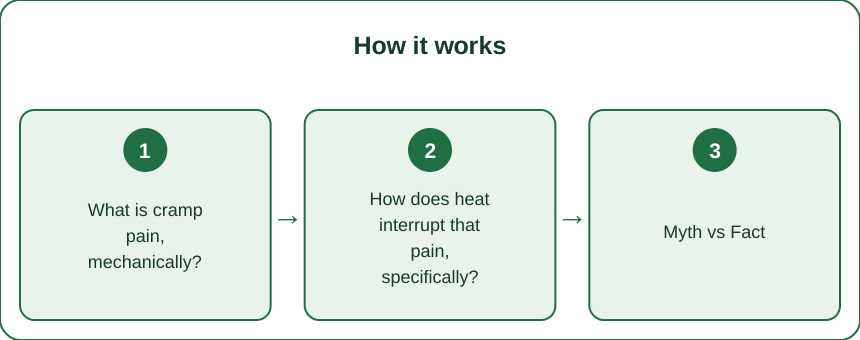
What is cramp pain, mechanically?
During your period, the uterine muscle contracts — driven by prostaglandins — to shed its lining. Strong contractions do two painful things: the muscle effort itself aches (a uterine ‘charley horse’), and intense contractions temporarily squeeze down local blood flow, creating brief oxygen shortage in the tissue — which is a classic, potent pain generator (the same reason an over-cuffed arm aches).
Higher prostaglandin levels correlate with stronger contractions and worse cramps — which is why anti-prostaglandin painkillers (NSAIDs) work, and why they work best started early, before prostaglandin production peaks.
Heat attacks the same pain from the other side — the muscle-and-blood-flow side — which is why the two approaches stack so naturally rather than competing.
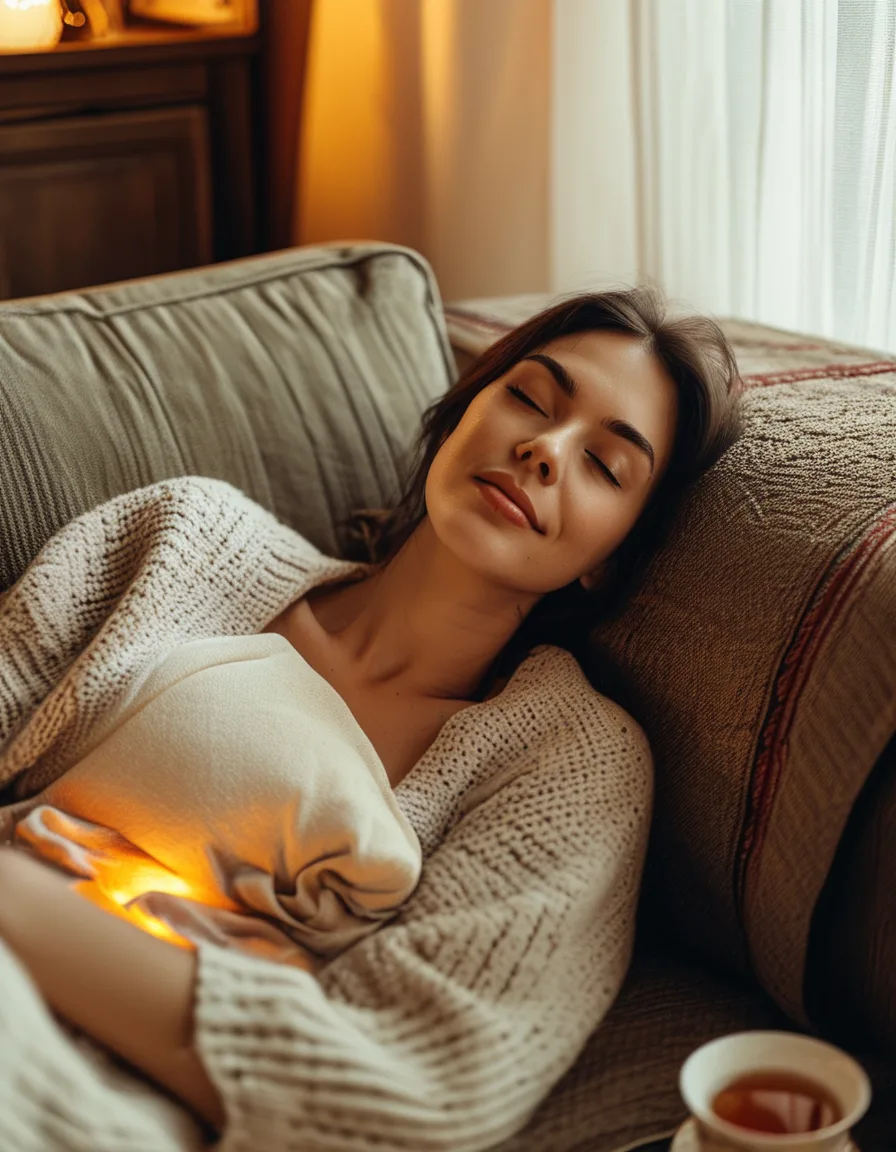
How does heat interrupt that pain, specifically?
Three converging mechanisms:
- Muscle relaxation: warmth reduces muscle tone and contractility in the heated region — directly easing the clench-ache component, the same way heat softens a knotted shoulder.
- Blood flow restoration: heat dilates local vessels, improving perfusion and countering the contraction-induced oxygen shortage — addressing the ischemic half of the pain at its source.
- Gate control: warm-sensation nerve signals travel to the same spinal processing as pain signals and partially ‘close the gate’ on pain transmission — the neurological reason warmth feels like relief within minutes, before the deeper mechanisms catch up.
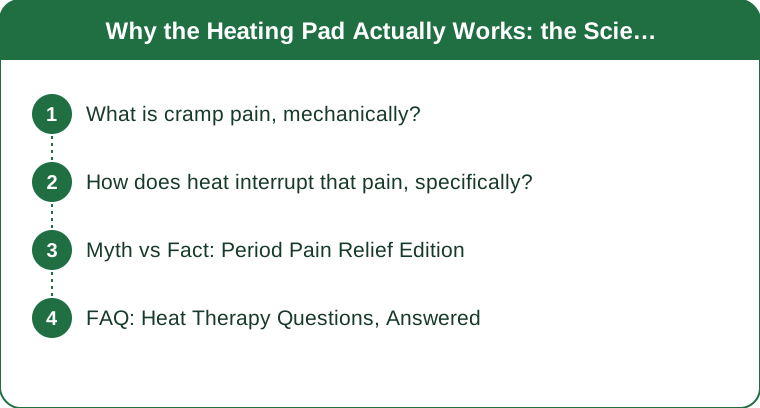
The evidence: randomized trials of continuous low-level topical heat (heat wraps worn on the lower abdomen) found relief comparable to ibuprofen for primary dysmenorrhea — a genuinely striking result for something with heat’s side-effect profile (approximately none, used sensibly).
Best practice from the research: target ~40°C/104°F (warm, never skin-reddening hot), start at the first sign of cramps rather than at peak, maintain 30+ minutes — continuous wearable heat wraps shine precisely because they sustain the dose.
Myth vs Fact: Period Pain Relief Edition
Myth: Heat is just psychological comfort. Fact: Three named mechanisms and randomized-trial performance against a standard painkiller say otherwise. It’s real analgesia that happens to also be cozy.
Myth: You must choose heat or medication. Fact: They work on different links of the chain (heat: muscle/blood flow/gating; NSAIDs: prostaglandin production) and combine well — a common effective pattern is early NSAID + continuous heat. Medication questions, especially with other conditions or medications in play, belong with a pharmacist or clinician. This is general information, not medical advice.
Myth: Hotter works better. Fact: The mechanisms saturate at warm — extra heat adds only burn risk (and ‘toasted skin’ mottling from chronic high heat). 40°C sustained beats scorching briefly, every time.
Myth: Needing a heating pad monthly means something’s wrong. Fact: Common cramps responding to heat and OTC measures are, well, common. The actual flags: pain that’s severe enough to derail life despite treatment, suddenly worse than your normal, progressively worsening over months, or paired with heavy bleeding or pain outside periods — that cluster deserves a medical workup (conditions like endometriosis hide behind ‘just bad cramps’ for years). Advocating for that evaluation is self-care too.
FAQ: Heat Therapy Questions, Answered
Electric pad, wearable wrap, hot water bottle, or bath?
All deliver the mechanisms; the trials’ star was the wearable continuous wrap simply because it sustains 30+ minutes while you live your life. Practical ranking: wearable wrap for out-and-about days, electric pad for couch evenings, water bottle as the trusty budget option, warm bath as the full-body bonus round.
How early should I start heat?
At the first familiar twinge — same logic as NSAID timing. Pre-empting the peak beats chasing it; many wrap users start the morning cramps are due.
Is it safe to sleep with a heating pad?
Electric pads and sleep don’t mix (burn risk rises as you stop noticing heat) — use auto-shutoff models for evening wind-down, then switch to a pre-warmed (not boiling) water bottle or a microwavable pack that cools naturally overnight. Low-level wearable wraps rated for hours are the engineered middle ground.
TL;DR:
- Cramps = prostaglandin-driven contractions + temporary blood-flow squeeze; heat relaxes the muscle, restores flow, and gates the pain signal
- Trials found continuous topical heat comparable to ibuprofen for cramp relief — grandma was practicing evidence-based medicine
- Dose it right: ~40°C, started at first twinge, sustained 30+ minutes; combines fine with early NSAIDs
- Severe, escalating, or life-derailing pain is a workup conversation, not a bigger pad
The most underrated analgesic in the house was in the linen closet the whole time. This is general information, not medical advice.
Keep Reading
This article is for general informational purposes only and is not medical advice. Always consult a qualified health professional for guidance specific to you.