Why Period Cramps Can Get Worse in Your 30s (Not Better)
Quick Answer: Cramps can worsen in your late 20s and 30s due to rising prostaglandin production, which is common and usually not dangerous — but new or escalating pain after age 25 is worth a doctor visit to rule out conditions like endometriosis.
Everyone told you cramps get better with age. Then your 30s hit and they got worse. That mismatch between expectation and reality is exactly why so many people wait too long to get it checked.

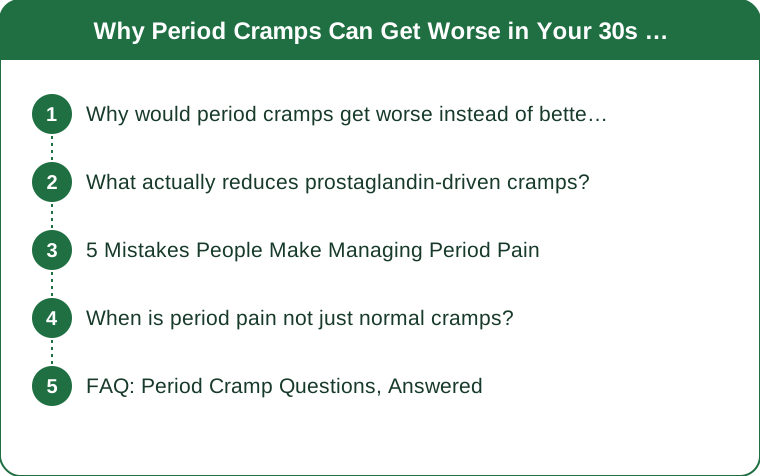
Why would period cramps get worse instead of better over time?
Prostaglandin levels — the hormone-like compounds that trigger uterine contractions — can increase with age for reasons unrelated to any disease, especially in your late 20s to mid-30s. More prostaglandins means stronger contractions means more pain, even with a completely normal uterus.
This is different from cramps that worsen dramatically or come with new symptoms like pain during sex or between periods — that pattern warrants medical evaluation.
What actually reduces prostaglandin-driven cramps?
NSAIDs taken 1 day before your period starts (not after cramps begin) block prostaglandin production more effectively than waiting for pain. This single timing change is the biggest lever most people are missing.
Heat therapy at 40-45°C applied to the lower abdomen works nearly as well as OTC pain relievers in several studies, and combining both is more effective than either alone.

5 Mistakes People Make Managing Period Pain
1. Waiting until pain starts to take anything. Prostaglandins are already released — you’re playing catch-up.
2. Assuming worse pain each cycle is ‘just aging.’ Escalating pain deserves a checkup, not just a bigger heating pad.
3. Skipping movement entirely. Light walking or stretching increases blood flow and can ease cramping within 20-30 minutes.
4. Under-dosing NSAIDs. Following the label’s full recommended dose (not a cautious half-dose) is what matches the studied effect.
5. Ignoring caffeine and alcohol timing. Both can intensify cramping in the 48 hours before your period for many people.
When is period pain not just normal cramps?
See a doctor if pain: is severe enough to miss work or school, doesn’t respond to NSAIDs plus heat, occurs outside your period, or comes with heavy bleeding (soaking a pad hourly). These can indicate endometriosis, fibroids, or other conditions that benefit from early diagnosis.
This is general information, not medical advice — persistent or worsening pain deserves a professional evaluation, not just better home management.
FAQ: Period Cramp Questions, Answered
Is it normal for cramps to change every year?
Some year-to-year variation is normal, but a clear worsening trend over several cycles is worth mentioning to a doctor rather than assuming it’s just aging.
Does birth control help with prostaglandin-related cramps?
Hormonal birth control reduces prostaglandin production for many people and is a common first-line option — discuss it with a doctor if lifestyle measures aren’t enough.
How long before my period should I start taking NSAIDs?
Starting 24 hours before your period is expected, if your cycle is predictable, generally outperforms waiting for the first cramp.
TL;DR:
- Rising prostaglandins, not aging itself, usually explain worsening cramps in your late 20s-30s
- Take NSAIDs 1 day before your period starts, not after pain begins
- Combine heat therapy with NSAIDs for a stronger effect than either alone
- Escalating or severe pain deserves a doctor visit, not just better home care
This is general information, not medical advice.
Keep Reading
This article is for general informational purposes only and is not medical advice. Always consult a qualified health professional for guidance specific to you.