Birth Control vs Natural Remedies for Period Pain: What Actually Helps More?
Quick Answer: Hormonal birth control tends to produce the most consistent, significant reduction in period pain for moderate-to-severe cramps because it directly reduces the prostaglandins driving the pain, while natural approaches like heat and anti-inflammatory foods offer real but generally more modest relief for mild-to-moderate cases.
You’ve tried the heating pad, cut caffeine, and started taking magnesium, and the cramps are still bad enough to derail a day. It’s worth understanding honestly where each option actually lands.

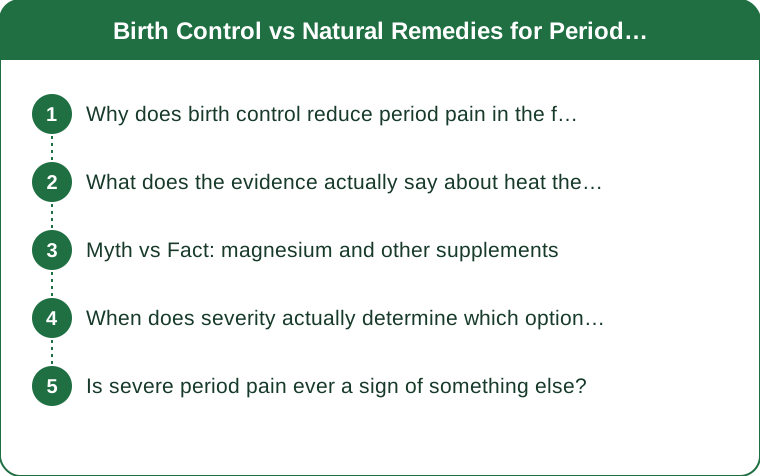
Why does birth control reduce period pain in the first place?
Most period cramping is driven by prostaglandins, hormone-like compounds that trigger uterine contractions — hormonal birth control (pills, the hormonal IUD, patches) generally thins the uterine lining and reduces prostaglandin production, directly addressing the mechanism causing the pain, not just masking it.
This is why birth control tends to outperform purely symptomatic approaches for people with genuinely severe cramping, particularly when an underlying condition like endometriosis is contributing.
What does the evidence actually say about heat therapy?
Heat therapy has real research support — studies comparing heat patches to over-the-counter pain relievers have found comparable pain reduction in some cases, working by increasing blood flow and relaxing uterine muscle tension. It’s genuinely effective, just typically for mild-to-moderate pain rather than severe cramping.
Continuous low-level heat (like a wearable heat patch) tends to outperform a hot water bottle used intermittently, since sustained warmth matters more than peak temperature.

Myth vs Fact: magnesium and other supplements
Myth: magnesium supplements eliminate period pain for most people. Fact: some studies show modest benefit for cramp severity, particularly in those with lower baseline magnesium levels, but it’s not a dramatic fix comparable to hormonal intervention for severe cases.
Myth: natural remedies have no real evidence behind them. Fact: omega-3 supplementation, in particular, has decent evidence for modestly reducing prostaglandin-driven inflammation — ‘natural’ doesn’t mean unstudied, it just tends to mean a smaller effect size.
When does severity actually determine which option makes sense?
For mild cramping that doesn’t interfere with daily activities, natural approaches (heat, anti-inflammatory diet patterns, gentle movement) are often sufficient and avoid the side effects or commitment that come with hormonal birth control. For pain severe enough to miss school, work, or normal activity, that’s generally a signal worth discussing hormonal or other medical options with a provider.
There’s no obligation to escalate to birth control if natural approaches are genuinely managing your symptoms well — the decision should track your actual pain level, not a default assumption either way.
Is severe period pain ever a sign of something else?
Yes — pain that’s dramatically worsening over time, doesn’t respond to typical measures, or comes with other symptoms like heavy bleeding or pain outside your period window can indicate endometriosis or other conditions that need proper diagnosis, not just better pain management. This distinction matters because treating the underlying cause changes the outcome significantly.
This is general information, not medical advice — a gynecologist can rule out underlying conditions that neither birth control nor natural remedies alone would fully address if left undiagnosed.
TL;DR:
- Birth control reduces prostaglandins directly, making it more effective for moderate-to-severe cramps
- Heat therapy has real evidence for mild-to-moderate pain, comparable to some OTC pain relievers
- Magnesium and omega-3s show modest, real benefit — not dramatic, but not placebo either
- Match the approach to your actual pain severity, and get worsening pain checked rather than just managed
Neither option is universally ‘better’ — it depends on how severe your pain actually is and whether an underlying condition needs addressing first.
Keep Reading
This article is for general informational purposes only and is not medical advice. Always consult a qualified health professional for guidance specific to you.