Does Magnesium Actually Help Period Pain? Here's What the Evidence Says
Quick Answer: Several small studies show magnesium supplementation (roughly 200-360mg daily, started a few days before your period) can modestly reduce cramp intensity, likely by relaxing uterine muscle. It’s not a cure-all, but the evidence is real enough to be worth a try alongside other pain management.
Magnesium shows up on every ‘natural period pain relief’ list, right next to heat therapy and ginger tea. But is there real evidence, or is this another supplement trend riding on vague wellness claims?

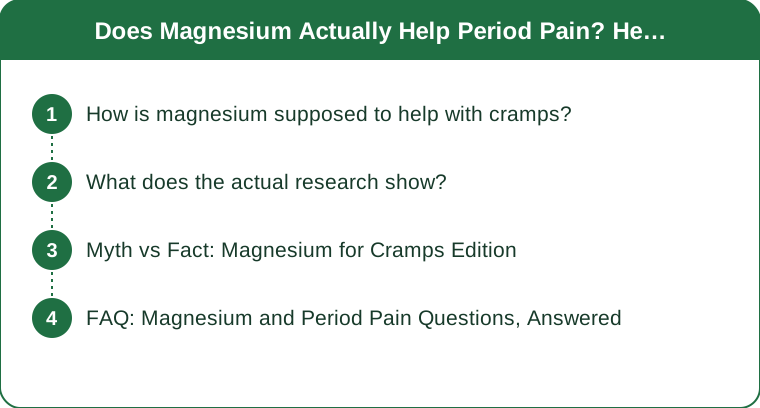
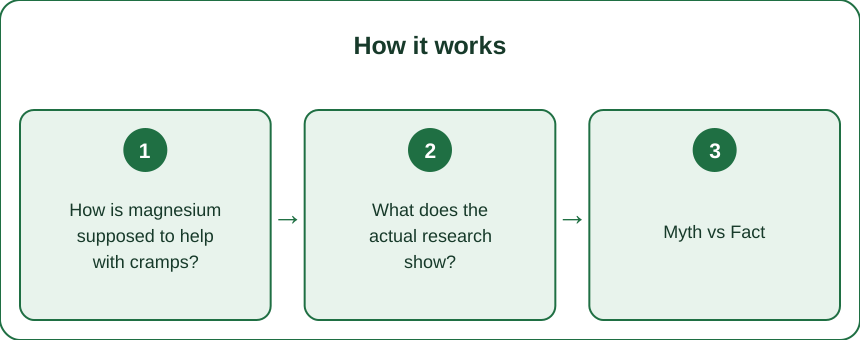
How is magnesium supposed to help with cramps?
Period cramps (dysmenorrhea) are largely driven by prostaglandins, compounds that trigger uterine muscle contractions. Magnesium plays a role in muscle relaxation broadly, and low magnesium status has been linked in some studies to more intense prostaglandin activity — giving a plausible mechanism for why supplementing might ease cramp severity.
It’s a modest effect, not a replacement for medication when pain is severe, but the biological rationale holds up better than many trend supplements.
What does the actual research show?
A handful of small randomized trials found magnesium supplementation reduced self-reported cramp severity compared to placebo, with effects generally modest — think ‘somewhat less painful,’ not ‘pain gone.’ Sample sizes are small and more research is needed, but the direction is consistently positive rather than mixed.
Typical studied dosing: 200-360mg daily, often started 3-5 days before the period is expected and continued through the first days of bleeding.

Myth vs Fact: Magnesium for Cramps Edition
Myth: Magnesium works instantly, like ibuprofen. Fact: It’s a cumulative effect over days of use, not a same-day pain reliever — it needs to build up starting before symptoms hit.
Myth: More magnesium means more relief. Fact: Beyond the studied range, extra magnesium mostly just causes GI upset (loose stools) without added benefit — more isn’t better here.
Myth: Magnesium can replace medication for severe pain. Fact: For debilitating cramps, it’s a reasonable complement, not a substitute — and severe pain that disrupts your life deserves a medical evaluation, not just a supplement swap.
FAQ: Magnesium and Period Pain Questions, Answered
What form of magnesium is best for cramps?
Magnesium glycinate is well-absorbed and gentle on the stomach; magnesium citrate works too but is more likely to cause loose stools at higher doses.
When should I start taking it each cycle?
Studies generally start dosing 3-5 days before your period is expected, continuing through the first couple of days of bleeding, for the best chance at reduced severity.
Is magnesium safe to take alongside ibuprofen for cramps?
Generally yes for most people, but check with your doctor or pharmacist if you take other medications or have kidney issues. This is general information, not medical advice.
TL;DR:
- Magnesium (200-360mg/day) has modest but real evidence for reducing cramp intensity
- Start 3-5 days before your period — it’s cumulative, not instant relief
- More than the studied dose doesn’t add benefit, just GI upset
- It’s a complement to pain management, not a substitute for medical care when pain is severe
Worth a one-cycle trial if cramps are moderate — just don’t expect it to replace medication on the hardest days. This is general information, not medical advice.
Keep Reading
This article is for general informational purposes only and is not medical advice. Always consult a qualified health professional for guidance specific to you.