Why Ibuprofen Works Noticeably Better When Taken Before Period Cramps Actually Start
Quick Answer: Ibuprofen works by blocking prostaglandin production, the compounds that directly cause uterine cramping, but it can’t reverse prostaglandins already released and actively causing pain — taking it preemptively, right as your period is expected or at the very first mild twinge, blocks the pain cascade before it fully escalates, while waiting until cramps are already severe means playing catch-up against prostaglandins already in effect.
If ibuprofen ‘doesn’t work as well’ for your cramps, timing relative to when you take it may be a bigger factor than the medication itself.
This is general information, not medical advice — talk with your doctor about persistent or severe period pain.

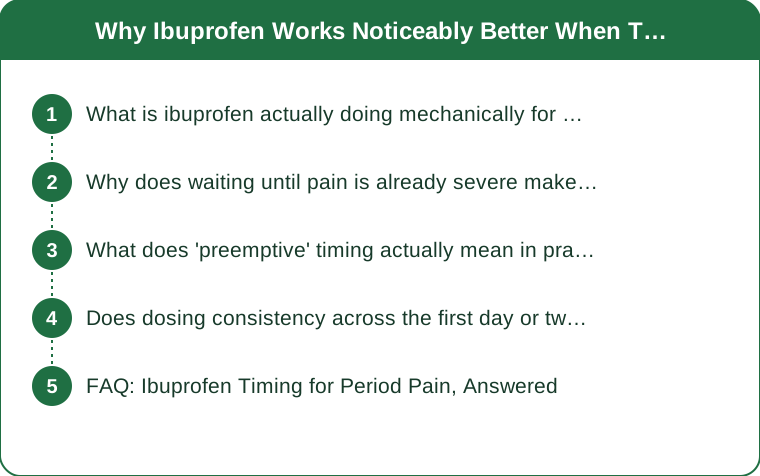
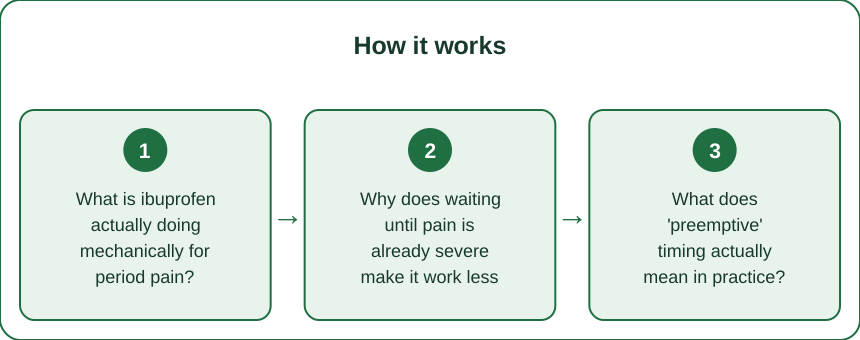
What is ibuprofen actually doing mechanically for period pain?
It blocks the production of prostaglandins, hormone-like compounds that directly cause the uterine muscle contractions responsible for cramping. Prostaglandin levels typically peak in the first day or two of a period, driving the most intense cramping during that window.
Why does waiting until pain is already severe make it work less effectively?
Once prostaglandins are already released and actively causing contractions, ibuprofen can only block further production — it doesn’t reverse the effect of prostaglandins already circulating, meaning pain already underway takes longer to resolve than it would have with earlier blocking.

What does ‘preemptive’ timing actually mean in practice?
Taking a first dose right as your period is expected to start, or at the very first mild twinge, rather than waiting for pain to become significant, blocks a larger share of the prostaglandin cascade before it escalates.
Does dosing consistency across the first day or two matter as much as the first dose timing?
Yes — maintaining consistent dosing intervals through the highest-prostaglandin window (typically the first 24-48 hours) sustains the blocking effect, rather than a single early dose followed by gaps that let prostaglandin levels climb again.
FAQ: Ibuprofen Timing for Period Pain, Answered
Is it safe to start taking ibuprofen before period pain even begins?
For most people without contraindications, taking it at the very first sign of an expected period is a commonly recommended approach, though check with your doctor if you have any conditions affecting NSAID use.
Does this timing principle apply to other pain relievers too, like naproxen?
Yes — the same prostaglandin-blocking mechanism and preemptive timing logic applies to other NSAIDs, not just ibuprofen specifically.
What if preemptive dosing still doesn’t control the pain well?
Persistent severe pain despite proper timing and dosing is worth discussing with a doctor, since it may indicate an underlying condition worth evaluating.
TL;DR:
- Ibuprofen blocks prostaglandin production but can’t reverse prostaglandins already released
- Prostaglandin levels peak in the first day or two of a period, driving the worst cramping
- Taking a dose preemptively, at the first twinge, blocks more of the cascade before it escalates
- Consistent dosing through that peak window matters as much as early timing
- This is general information, not medical advice — talk with your doctor about persistent severe pain
Keep Reading
This article is for general informational purposes only and is not medical advice. Always consult a qualified health professional for guidance specific to you.