Why Cramps Feel So Much Worse on the Days You Sit All Day
Quick Answer: Prolonged sitting reduces pelvic blood flow, shortens hip flexors that pull on the lower back and pelvis, and encourages shallow breathing that limits the diaphragm’s gentle pumping effect on abdominal circulation. Cramping pain is partly ischemic — driven by reduced blood flow to a contracting uterus — so anything that further restricts circulation makes it worse. Standing and walking for two minutes every 30 minutes measurably helps.
Day two of your cycle on a weekend when you were up and about: manageable.
Day two on a nine-hour desk day: barely functional. Same cycle, different chair.
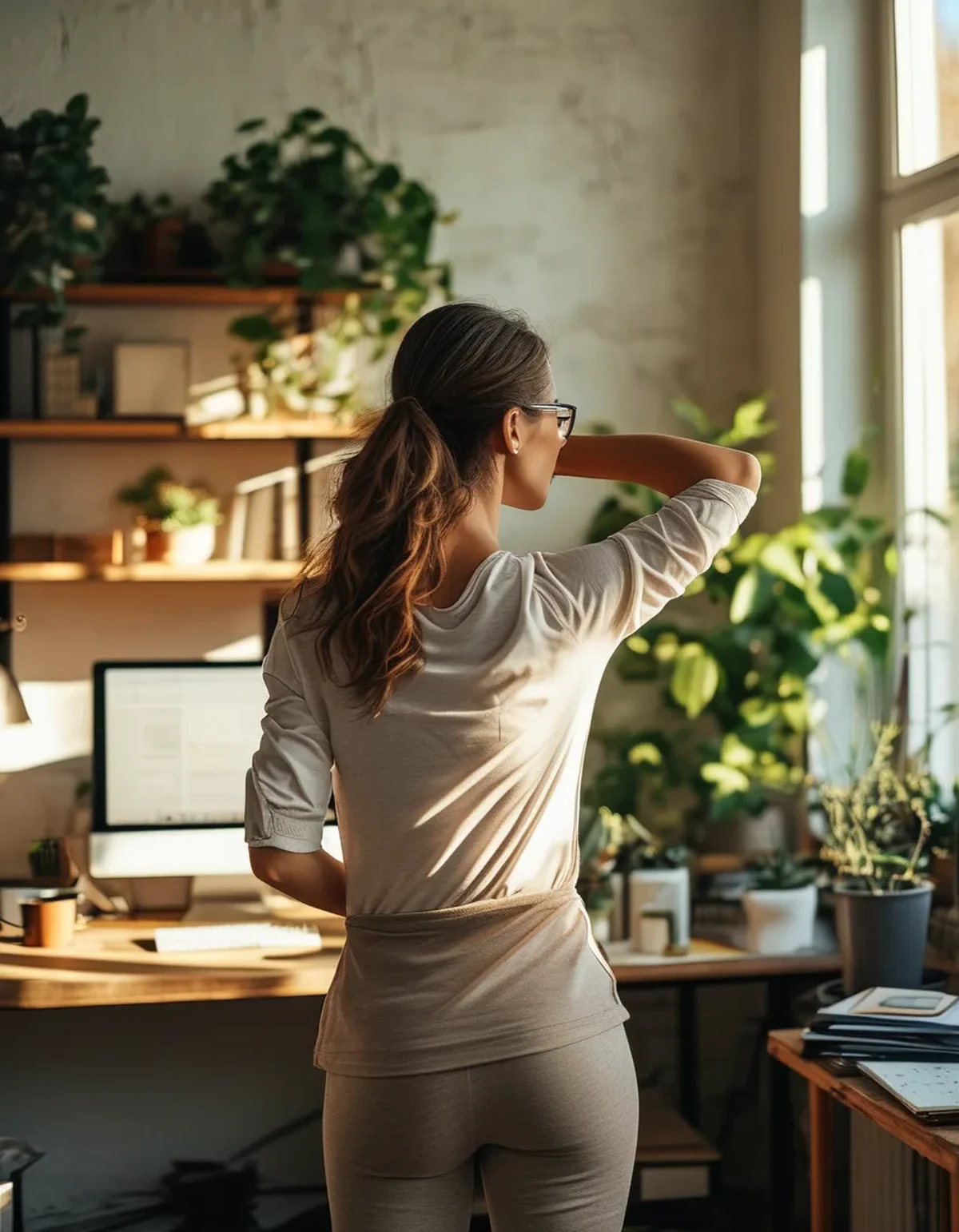
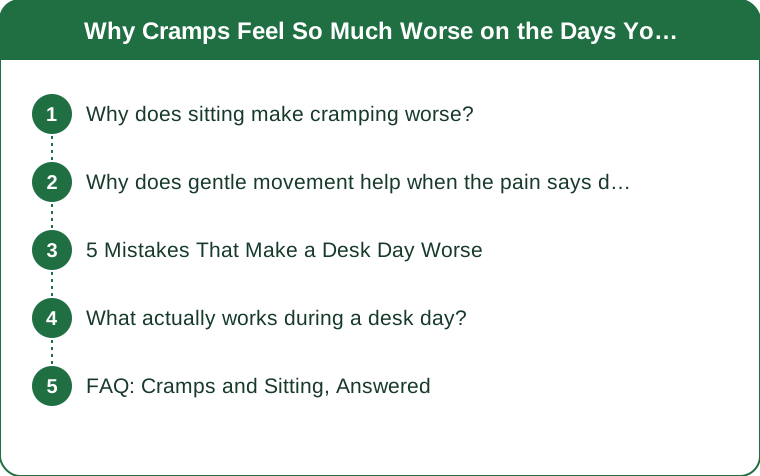
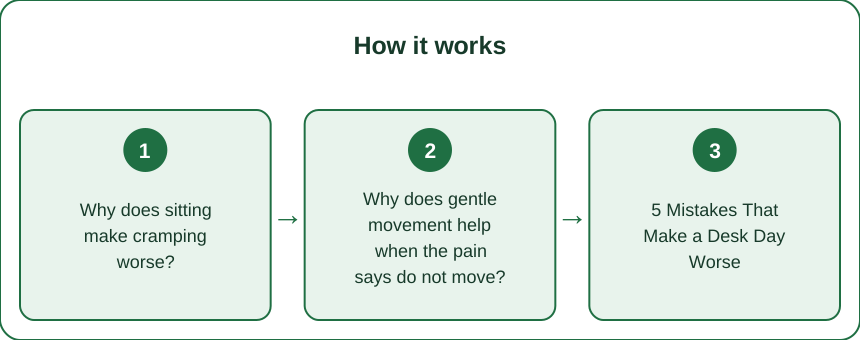
Why does sitting make cramping worse?
Because cramping pain is largely about blood flow, and sitting restricts it.
Menstrual cramps are partly ischemic pain. Prostaglandins drive uterine contractions, and strong contractions temporarily reduce blood flow to the uterine muscle itself. Reduced flow to contracting muscle produces pain — the same basic mechanism behind a muscle cramp anywhere.
Sitting reduces pelvic circulation further. A seated position with hips flexed at 90 degrees compresses vessels at the hip crease and reduces venous return from the pelvis and legs. You are adding a circulation restriction on top of one already happening.
Hip flexors shorten and pull. Hours of sitting keeps the hip flexors in a shortened position. Those muscles attach to the lumbar spine and pelvis, so a tight, shortened psoas tilts the pelvis and increases lower back pain — which most people experience as part of the same cramping picture.
Breathing gets shallower when you sit. A slumped posture compresses the diaphragm’s range. The diaphragm’s movement provides a gentle pumping action on abdominal circulation, and losing that removes a small but real contributor to pelvic blood flow.
Everything compounds over hours. None of these individually explains a bad day. Stacked over eight hours, the difference between a moving day and a sitting day is substantial and entirely consistent with what people report.
Why does gentle movement help when the pain says do not move?
Because the instinct to curl up and stay still addresses the wrong problem.
Movement increases blood flow to the area. Walking increases circulation to the pelvis, which directly counters the ischemic component. This is the main reason movement helps and it works within minutes rather than hours.
It releases endogenous pain modulators. Physical activity triggers the release of the body’s own pain-dampening chemicals. Even light activity produces a measurable effect on perceived pain.
It reduces the muscular guarding around the pain. Cramping causes reflexive tensing of the abdominal wall and lower back, and that guarding becomes its own source of pain. Gentle movement interrupts the guarding cycle.
Heat and movement work through different mechanisms and stack well. Heat increases local blood flow through vasodilation; movement increases it through the muscle pump. Using both is meaningfully better than either alone, which is why a heating pad plus a short walk beats an hour of either.
The intensity that helps is lower than people expect. This is not a case for a hard workout on day one. Walking, gentle stretching, and easy movement produce most of the benefit. Intense exercise on a bad day can be fine if you feel up to it, but it is not required for the effect.
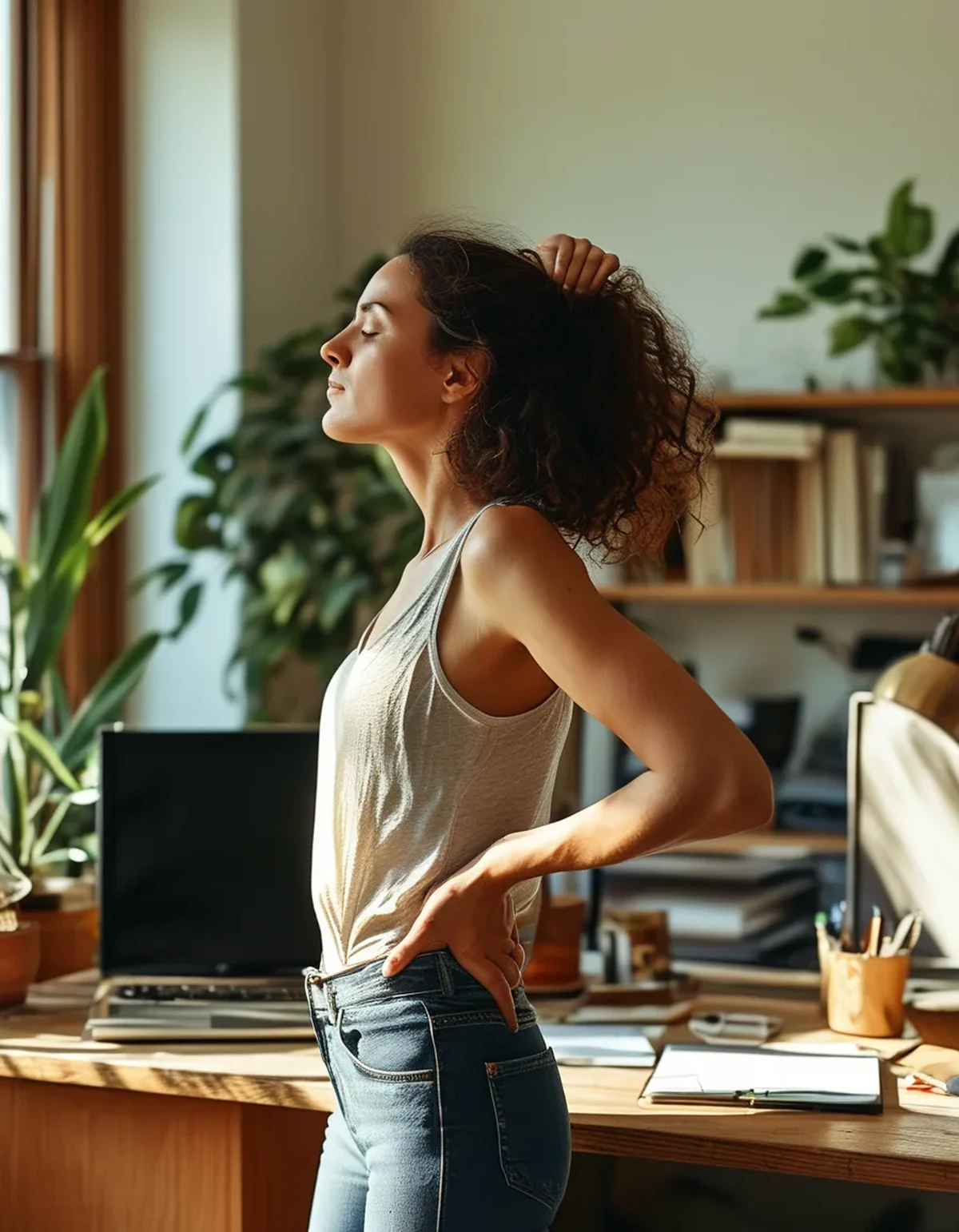
5 Mistakes That Make a Desk Day Worse
1. Curling forward in the chair. It is the intuitive position and it maximizes hip flexion and compresses the abdomen. Sitting upright with hips slightly higher than knees is less comfortable for ninety seconds and better for the next three hours.
2. Waiting until the pain is bad to take the pain reliever. NSAIDs work by blocking prostaglandin production, not by blocking pain that prostaglandins already caused. Taken at the first sign — or the day before, if your cycle is predictable — they work substantially better than taken at peak pain.
3. Skipping lunch or eating at your desk. The walk to get food is often the only meaningful movement in a desk day. Eating at your desk removes it, and low blood sugar makes pain perception worse independently.
4. Extra coffee to push through. Caffeine is a vasoconstrictor, which is exactly the wrong direction when the problem is reduced blood flow. Many people find that an extra afternoon coffee on a cramping day makes the last two hours noticeably worse.
5. Crossing your legs. It further restricts circulation and asymmetrically tilts the pelvis. On a normal day it is harmless. On a cramping day it is a small, free thing to stop doing.
What actually works during a desk day?
Small, frequent interruptions beat one long break.
Stand and walk two minutes every 30 minutes. Set a timer. Two minutes is short enough that you will actually do it and long enough to restore circulation. This is the single highest-value change available.
Use a heating pad continuously, not intermittently. Heat applied consistently across the day works better than heat applied only when pain spikes. A cordless or USB heating pad makes this practical at a desk, and continuous low heat is more effective than occasional high heat.
Do a standing hip flexor stretch twice a day. Thirty seconds per side. This directly counters the shortening that is contributing to the back pain component.
Breathe into your belly for one minute every hour. Hand on the stomach, slow breath in so the hand rises. It restores the diaphragm movement that a slumped posture suppresses, and it lowers the guarding tension.
Raise your chair slightly. Hips a little above knees opens the hip angle and reduces the compression at the crease. It is a 30-second adjustment that changes eight hours. If pain is severe, worsening cycle over cycle, or not responding to over-the-counter treatment, that is worth a professional evaluation rather than more chair adjustments — this is general information, not medical advice.
FAQ: Cramps and Sitting, Answered
Would a standing desk fix this?
It helps, but standing still all day has its own circulation problems and can increase lower back discomfort. Alternating — 30 minutes sitting, 30 minutes standing, with short walks — beats either extreme, and that pattern is useful on non-cycle days too.
Does exercise the day before help?
Regular activity across the whole cycle is associated with less severe cramping overall, so the answer is yes over weeks and months, less so as a day-before intervention. A single workout the day before is unlikely to change much; a consistent habit over three cycles often does.
Why is the pain sometimes worse in the afternoon?
Mostly accumulation — hours of sitting, hip flexor shortening, and the natural decline in pain tolerance through the day all peak in the afternoon. It is also when many people have had the least movement, since mornings usually involve the commute and getting ready.
TL;DR:
- Cramping pain is partly a blood flow problem, and sitting restricts pelvic circulation further
- Shortened hip flexors and shallow, slumped breathing add the back pain and the tension component
- Two minutes of walking every 30 minutes beats one long break by a wide margin
- Continuous low heat outperforms occasional high heat; use both heat and movement, not one
- Take NSAIDs at the first sign rather than at peak pain — they prevent better than they treat
The frustrating thing about this one is that the day you least want to get up is the day getting up helps most. Two minutes on a timer removes the decision entirely, which is the only reason it actually happens.
Keep Reading
This article is for general informational purposes only and is not medical advice. Always consult a qualified health professional for guidance specific to you.