Why Do Period Cramps Feel Worse When the Weather Turns Cold?
Quick Answer: Cold causes blood vessels near the surface to constrict and increases baseline muscle tension, both of which can make cramping feel more intense. Cold weather also reduces daily movement, and movement is one of the better-supported ways to ease menstrual pain. Add reduced daylight affecting mood and pain perception, and the seasonal pattern many people report has several plausible contributors.
Same cycle. Same body. October hurts more than July did.
You are not imagining the pattern.
This is general information, not medical advice.
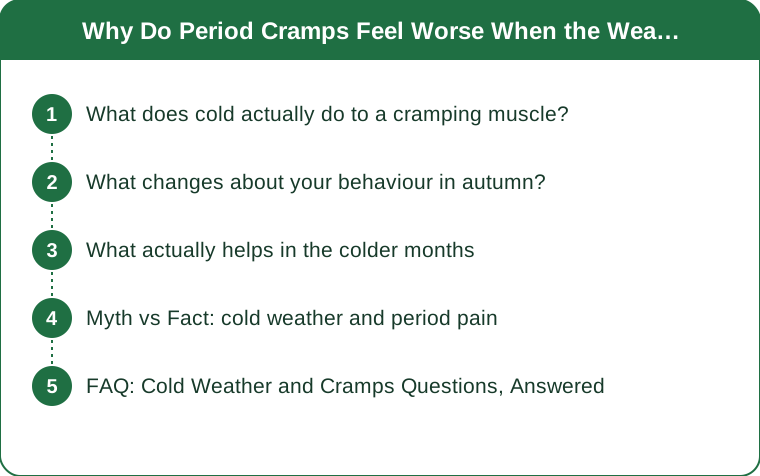
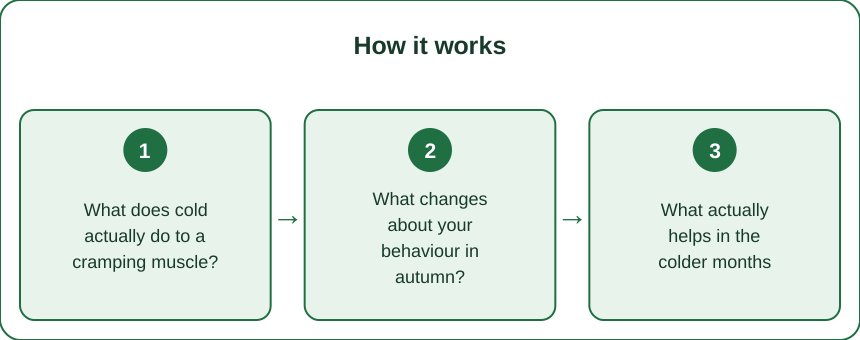
What does cold actually do to a cramping muscle?
Three things, and they stack.
Vasoconstriction. In cold conditions, blood vessels near the skin narrow to conserve core heat. This is a normal and necessary response. Menstrual cramping is thought to involve reduced blood flow to the uterine muscle during contraction, which is part of why the pain has an aching, ischaemic quality — and anything that reduces circulation further is unlikely to help.
This is also the mechanism that makes heat one of the most consistently reported forms of relief. A heat pack encourages local blood flow and helps smooth muscle relax, and studies comparing topical heat with common pain relief have found it performs respectably.
Increased baseline muscle tension. Cold raises resting muscle tone across the body — the involuntary bracing you do walking outside on a cold morning. Abdominal and lower back muscles that are already tense provide a less comfortable starting point when cramping begins.
Reduced tissue compliance. Cold tissue is stiffer and less pliable. The lower back and hips, which frequently carry referred menstrual pain, feel tighter in cold weather independently of the cycle.
None of these change the underlying process producing the cramp. They change the conditions in which it is experienced, which is enough to make a real difference to how it feels.
Does this mean warmth is genuinely treatment rather than comfort?
Local heat has reasonable evidence behind it for menstrual pain, so it is more than just comforting. It is also one of the few options with essentially no downside.
What changes about your behaviour in autumn?
Often more than what changes about your physiology.
You move less. This is the biggest behavioural factor. Darker evenings, colder mornings, and worse weather all reduce incidental daily movement. Physical activity is one of the more consistently supported non-drug approaches to menstrual pain, and losing it seasonally removes something that was helping.
You sit for longer. Prolonged sitting in a flexed position increases pressure and tension through the lower abdomen and back. A summer day with several short walks distributes that load; an autumn day at a desk does not.
Sleep shifts. Changing light exposure alters sleep timing and quality for many people, and poor sleep reliably lowers pain tolerance. This is one of the better-established relationships in pain research.
Mood changes. Reduced daylight affects mood for a substantial number of people, and mood influences pain perception meaningfully. Low mood does not create pain, and it does change how much of it reaches you.
Diet and hydration shift. Cold weather tends to reduce fluid intake and change what people eat. Dehydration is associated with worse cramping for many, and it happens quietly when you stop feeling thirsty.
Which of these is worth addressing first?
Movement, by a clear margin. It is the one with the most supporting evidence and the largest seasonal drop.
What actually helps in the colder months
The approaches with the best support, adapted for the season.
1. Heat, applied properly. A heat pack, hot water bottle, or heat patch on the lower abdomen or lower back. Sustained warmth over an hour or more works better than brief application, and heat patches designed to be worn under clothing let you keep moving while using them — which combines the two most useful interventions.
2. Keep moving, at lower intensity if needed. Walking is enough. The evidence for exercise reducing menstrual pain does not require the exercise to be hard, and gentle movement is far more sustainable during a painful period than a demanding session. Twenty minutes outdoors also addresses the daylight problem simultaneously.
3. Time pain relief correctly. For those who use anti-inflammatory pain relief, taking it as symptoms begin rather than waiting until pain is established is generally more effective, because it acts on the prostaglandin production driving the cramping. Follow the guidance on the packet and check suitability with a pharmacist if you have any relevant conditions.
4. Dress for the parts that matter. Keeping the lower back and abdomen warm is not folklore. A longer layer that covers the lower back, higher-rise clothing, and avoiding a cold gap at the waist all reduce the local cooling that contributes to tension.
5. Protect sleep deliberately. Pain tolerance drops sharply with poor sleep, and autumn disrupts sleep timing. Consistent sleep and wake times matter more in the darker months than they do in summer.
6. Keep drinking. Warm drinks count, and they are easier to sustain in cold weather than cold water. Herbal tea is doing two jobs at once — fluid and warmth.
Does the heat need to be on the abdomen specifically?
The lower abdomen is most commonly used, and the lower back works well for people whose pain refers there. Whichever area is symptomatic is the right target.
Myth vs Fact: cold weather and period pain
Myth: Cold weather causes period pain. Fact: Cramping is driven by prostaglandins causing uterine muscle contraction, and that process is not caused by weather. Cold plausibly influences how the resulting pain is experienced, which is a different claim and a more accurate one.
Myth: Getting cold will make your period worse in a lasting way. Fact: There is no good evidence for lasting effects. Feeling worse while cold, and better once warm, is the pattern people actually describe.
Myth: You should rest completely when cramps are bad. Fact: Rest is fine and complete inactivity is generally not the most helpful choice. Gentle movement has better support than lying still, though how you feel on a given day is legitimate information.
Myth: Heat only masks the pain. Fact: Topical heat has been studied for menstrual pain with reasonable results, and the proposed mechanism — improved local blood flow and muscle relaxation — addresses part of the process rather than only the sensation.
Myth: Severe pain every month is just something to accept. Fact: Pain that stops you from working, studying, or functioning normally is worth medical assessment. Conditions including endometriosis and fibroids are frequently under-diagnosed for years because severe pain gets normalized.
FAQ: Cold Weather and Cramps Questions, Answered
Is there research showing periods are worse in winter?
Seasonal variation in menstrual symptoms has been reported in some studies, and the picture is not fully settled. The mechanisms described here — circulation, muscle tension, activity, sleep, and mood — are each individually well supported, which makes the pattern plausible even where direct seasonal evidence is limited.
How hot should a heat pack be?
Warm and comfortable, not hot. Skin burns from prolonged contact with heat sources are a genuine risk, particularly if you fall asleep with one. Use a cover and follow the product guidance.
Does a warm bath work as well?
Many people find it helps considerably, with the limitation that it ends when you get out. A wearable heat patch provides sustained warmth over a longer period.
Can exercise make cramps worse?
High-intensity exercise on a very painful day may not appeal, and that is reasonable. Gentle movement rarely worsens cramping and often eases it. Let the day dictate the intensity.
Should I take pain relief preventively?
Starting at the first sign of symptoms is commonly advised for anti-inflammatory relief. Taking it days in advance is not, and any regular use is worth discussing with a pharmacist or doctor.
When should I see a doctor?
Pain that prevents normal activities, pain that has recently become significantly worse, pain that continues outside your period, very heavy bleeding, or pain that does not respond to standard over-the-counter relief all warrant a conversation with a clinician.
TL;DR:
- Cold constricts surface blood vessels and raises baseline muscle tension — both plausibly worsen how cramping feels.
- Autumn also cuts daily movement, disrupts sleep, and reduces daylight, all of which affect pain perception.
- Sustained local heat has real evidence behind it and no meaningful downside.
- Gentle movement matters more than intense exercise, and twenty minutes outdoors addresses two problems at once.
- Time anti-inflammatory relief to the start of symptoms rather than waiting for established pain.
The cycle did not change. The conditions around it did — and unlike the cycle, the conditions are adjustable.
This is general information, not medical advice. Severe or worsening period pain should be assessed by a clinician.
Keep Reading
This article is for general informational purposes only and is not medical advice. Always consult a qualified health professional for guidance specific to you.