Why Day Two Cramps Feel Completely Different From Day One
Quick Answer: Day one pain is typically driven by peak prostaglandin release producing strong, rhythmic uterine contractions, which feels sharp, wave-like and gripping. By day two, prostaglandin levels are falling and pain more often reflects accumulated muscle fatigue, referred back pain and inflammation, which feels duller, heavier and more constant. Because the mechanisms differ, timing anti-inflammatories before day one and using heat and movement more on day two matches treatment to cause. This is general information, not medical advice.
Day one hurts in waves. Sharp, gripping, then a gap.
Day two is different — heavier, lower, in your back, and it does not come and go.
They are not the same pain, and they do not respond to the same things.

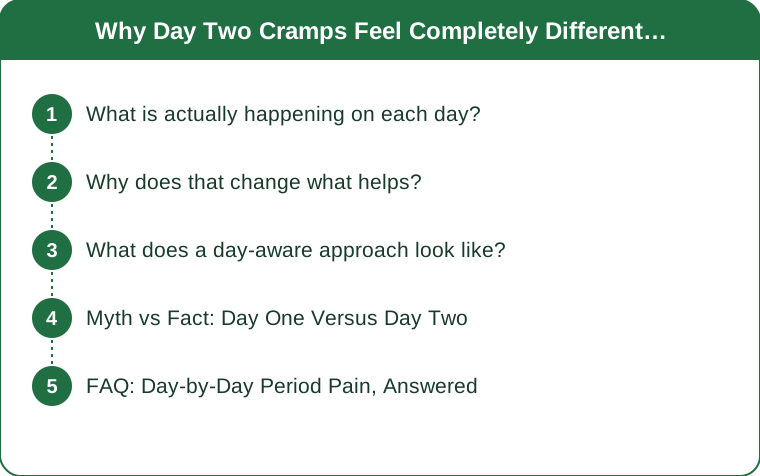
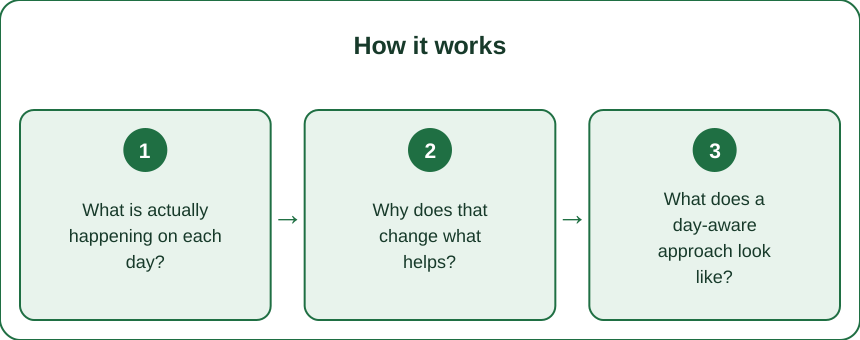
What is actually happening on each day?
Two different processes, overlapping but peaking at different times.
Day one is a prostaglandin story. Prostaglandin release peaks in the first 24 to 48 hours of bleeding. These compounds drive uterine contraction and constrict local blood vessels, producing the intense, wave-like cramping most people describe as sharp.
Contractions are strongest early. Uterine contraction intensity is highest at the start, which is why day one pain tends to arrive in identifiable peaks with relief between them.
Day two is more mixed. As prostaglandin levels decline, the sharp contractile pain typically eases, but you now have a uterine muscle that has been contracting hard for a day. The result is more of a muscular ache than a cramp.
Referred pain becomes more prominent. Lower back and thigh pain often peaks on day two, because referred pain patterns build rather than spike.
Fatigue changes pain perception. After a poor night’s sleep, pain tolerance drops measurably. Day two frequently follows a disrupted night, which alone makes the same pain feel worse.
Blood loss contributes by day two or three. Fatigue and lightheadedness from heavier flow arrive later and change how the whole thing feels, independent of the pain itself.
Why does that change what helps?
Because prostaglandin-driven pain and muscular ache respond to different interventions.
NSAIDs work best when started before day one pain peaks. Anti-inflammatories like ibuprofen work by inhibiting prostaglandin production, not by blocking pain that already exists. Starting 12 to 24 hours before expected onset, where your cycle is predictable enough, is substantially more effective than starting once cramping is established.
Their relative value drops by day two. With prostaglandin levels already falling, NSAIDs still help, but the margin over other approaches narrows.
Heat performs strongly on day two. Heat helps muscular ache and referred back pain particularly well, and this is exactly day two’s profile. Comparative research has found heat performing comparably to some oral analgesics for menstrual pain.
Movement helps more on day two than day one. Gentle walking or easy mobility work addresses muscular ache and stiffness. On day one, movement during peak contractions is often simply unwelcome, and that is reasonable.
Position matters differently. Day one often responds to curled positions that reduce contractile discomfort; day two back pain frequently prefers being upright or lying flat with knees supported.
Sleep becomes a treatment. Because day two pain perception is heavily affected by the previous night, protecting sleep on day one is a genuine day two intervention.

What does a day-aware approach look like?
Different plan for each day, decided in advance rather than improvised.
Day minus one, if predictable. Start your anti-inflammatory 12 to 24 hours before expected onset, if that is appropriate for you and your doctor agrees. This is the highest-leverage timing decision available.
Day one. Regular dosing rather than waiting for pain to return, heat on the lower abdomen, rest without guilt, and prioritise getting a decent night’s sleep even if that means an early night.
Day two. Heat moved to the lower back, gentle movement — a 15 to 20 minute walk is enough — hydration, and continued regular dosing if you are taking anything.
Hydration matters more than people expect. Dehydration is associated with worse cramping, and both days involve reduced drinking because you feel unwell.
Track two things only. Which day hurts more, and where. Two cycles of that tells you your own pattern, which may not match the typical one.
Seasonal note: cold environments increase muscle tension and are associated with worse perceived cramping. As homes get colder through autumn, the day two ache in particular tends to worsen, and a heated room genuinely helps more than it did in August.
Myth vs Fact: Day One Versus Day Two
Myth: Period pain is one thing that just gets better over time
Fact: The mechanism shifts from contractile to muscular and referred, which is why the character of the pain changes.
Myth: You should wait until pain is bad before taking anything
Fact: NSAIDs prevent prostaglandin production rather than reversing its effects. Earlier is meaningfully more effective.
Myth: Heat is just comfort, not treatment
Fact: Heat has performed comparably to some analgesics in menstrual pain research, and it is particularly suited to day two’s profile.
Myth: Rest is always the answer
Fact: Rest suits day one; gentle movement often suits day two better.
Myth: If day two is worse than day one, something is wrong
Fact: Patterns vary considerably between people. Consistency matters more than which day is worse.
Myth: Getting worse with age means something is wrong
Fact: It can be normal variation, but a clear change in pattern or severity is worth discussing with a doctor rather than absorbing.
FAQ: Day-by-Day Period Pain, Answered
Why is my back worse on day two?
Referred pain patterns build rather than spike, and by day two the uterine muscle has been working for a full day.
Should I take painkillers on a schedule or when it hurts?
For cycles where pain is predictable, regular dosing within the recommended limits is generally more effective than chasing pain. Follow the packaging and your doctor’s advice.
Where should I put the heat?
Lower abdomen on day one, lower back on day two, if your pattern matches the typical one. Follow where it actually hurts.
Is exercise safe during a period?
Yes for most people, and gentle movement often helps day two specifically. Intensity is your call based on how you feel.
Why do I sleep so badly on the first night?
Peak cramping, temperature changes and general discomfort all cluster on night one, which is part of why day two feels worse than the pain alone would explain.
When is it not normal?
Pain that stops you functioning, does not respond to over-the-counter treatment, worsens significantly over cycles, or comes with heavy bleeding warrants a medical opinion. This is general information, not medical advice.
TL;DR:
- Day one is prostaglandin-driven contraction — sharp, wave-like, peaking early.
- Day two is muscular ache, referred back pain and fatigue — duller and more constant.
- Start anti-inflammatories 12 to 24 hours before onset where your cycle allows.
- Heat and gentle movement earn their place most on day two; rest suits day one.
- Protecting night one sleep measurably improves day two pain perception.
Track which day hurts more for two cycles. Matching the treatment to the day is the whole gain.
Keep Reading
This article is for general informational purposes only and is not medical advice. Always consult a qualified health professional for guidance specific to you.